
The jaw is an unusual joint. It moves like a hinge joint but also slides, and it is limited by its connection to the joint on the other side. As a result, its anatomy is somewhat unusual too. Within the joint itself there is a disc of cartilage, which connects to some of the small muscles in the cheek. The role of the disc is to keep movement smooth and controlled, but it can become folded and cause symptoms, such as:
- clicking, especially when biting down with force
- locking, on opening, closing, or moving the jaw to one side
- pain, either locally to the jaw or travelling into the teeth or head
People quite often associate back problem with osteopathy, but who should you see for a jaw problem? Depending on the problem, you might need to see a dentist, GP, or your osteopath. We can be a good place to start, as we can assess the area as a whole and see if any other areas are involved in the problem.
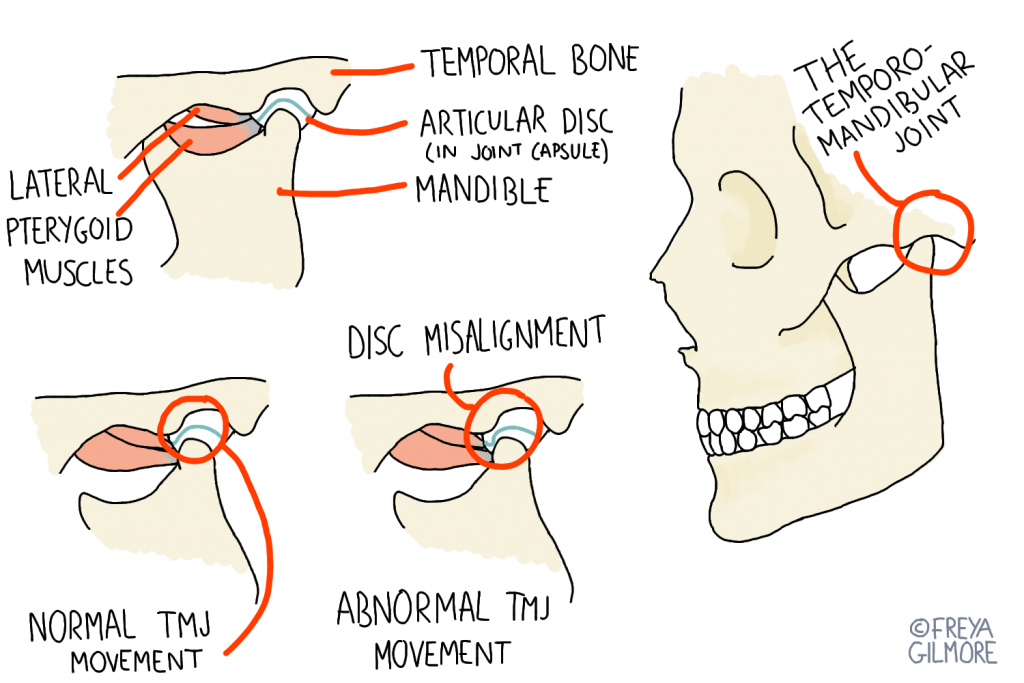
Muscular Problems
The muscles that attach to the cartilage disc are involved in smiling and chewing. They are the same ones that feel achey if you smile for too long, and occasionally you might feel that ache spreading into the jaw itself. Sometimes tightness from these muscles can pull on the disc and cause it to fold. The body’s reaction to the associated symptoms is to lock down the area to protect it. Unfortunately, this tends to mean tightening the exact muscles that are pulling on the disc. The problem becomes a difficult cycle to break, even more if the tightness is due to subconscious teeth grinding.
Your osteopath can use a range of techniques to release the muscles off. Sometimes this leads to immediate resolution of the folding and its symptoms. It may be the case that the muscles initially tighten up again, requiring a good plan to keep on top of them. There may be exercises your osteopath can give you to do between treatments until it all settles down.
The Jaw and Other Pains
Whereas a problem with the knee could quite feasibly lead to hip or ankle problems, the jaw seems quite isolated. In fact, a problem with the jaw can quickly cause compensation from the neck, and vice versa. The diagram below shows the effects of a “forward head posture” on the surrounding anatomy.
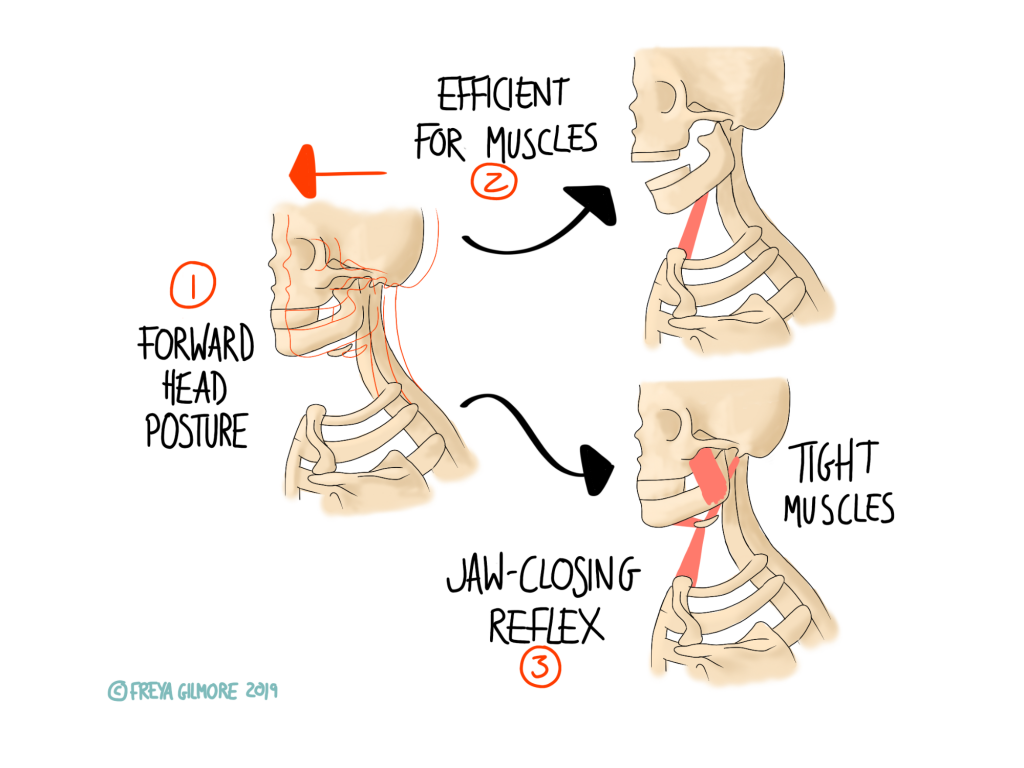
Headaches can also stem from problems here, whether via compensation from the neck or directly. Your osteopath will assess your whole body to determine the relationship between your symptoms. We can then look to manage each one, getting to the root cause where possible for long term prevention.
Our holistic approach continues beyond the treatment room. If your pain stems from tooth grinding, we may need to work alongside your dentist. When grinding is subconscious, or happens overnight, prevention can be difficult. A good strategy for you may be to look at having a splint made to wear overnight. Even if it doesn’t take much pressure off the jaw joint, it will at least take the strain off your teeth.
Book an appointment online here to start managing your jaw pain.
