
Sometimes confused with osteoarthritis, rheumatoid arthritis (RA) is an inflammatory, autoimmune condition. It is characterised by pain in the small joints of the body, eventually resulting in stiffness and joint deformity. Symptoms often begin between the ages of 30 and 50, but they can start earlier or later.
The Basics of Rheumatoid Arthritis
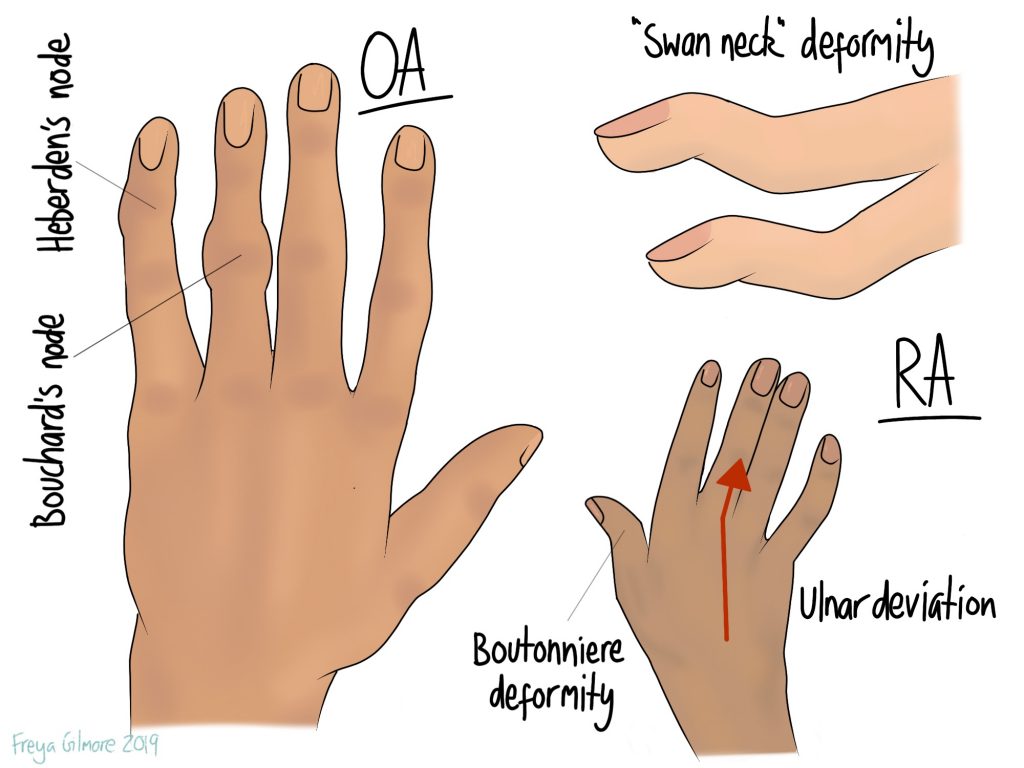
Typically, RA follows a relapsing-remitting pattern. During inflammatory episodes, the body mistakenly attacks its own joints. When the inflammation passes, the body repairs the damage. Over time, this leads to joint deformity as bone is imperfectly laid around the joint. These deformities are most easily spotted in the hands. Hard lumps on the knuckles, and deviation of the wrist away from the thumb are signs we look for when we suspect RA. Confusion with osteoarthritis is common, as this can also lead to lumps on the joints of the fingers. However, there is much less inflammation in OA and progress tends to be more linear. Your osteopath can help you differentiate between the two if you suspect you have arthritis in your hands.
The hands, feet, neck, and knees are often the first joints affected by RA. Inflammatory signs that help to differentiate RA from other conditions include:
- heat
- redness
- swelling
- pain
Pain is often worst first thing in the morning or after sitting still for a long time. You may already find yourself moving around more than you used to in order to keep the symptoms at bay.
Systemic Effects
Research shows that high blood pressure and osteoporosis are more common in people with RA. Osteoporosis is particularly significant to your osteopath, as it may be unsafe to perform some strong techniques. RA in the neck can also lead to joint instability that can contraindicate neck manipulations. However, it is important to note that osteoporosis is not always a permanent state. Bone is living tissue, and it responds to the demands placed on it. Medication and supplements combined with appropriate weightbearing exercise can help to improve bone density. Your GP is the best place to start when addressing osteoporosis.
Medications for RA can play a role in some systemic problems. Liver and kidney problems are examples of this, so your doctor may monitor changes depending on the medication you have been prescribed.
Rheumatoid arthritis is in the same family as other conditions, including psoriatic arthritis and IBD. Inflammatory Bowel Diseases include Crohn’s and Ulcerative Colitis. It is possible to have both RA and another rheumatoid condition. When trying to reach a diagnosis, it is important to know if there are any of these conditions in your personal or family history.
Osteopathy and Rheumatoid Arthritis
Osteopaths can help you manage rheumatic pain. Sometimes these conditions are mistaken for others. We have the luxury of time in our appointments, so we are in a good position to flag rheumatic conditions like this.
Although we can’t cure RA, we can help with your flares and longer term symptoms. Inflammatory conditions are worse with rest, but are also aggravated by too much exercise. We can help to get your joints moving during appointments, and we can work out a suitable exercise plan for you.
