
Osteopaths are manual therapists. The title is legally protected, which means you can only call yourself an osteopath if you have done the necessary training, registered with the governing body, and maintained your insurance and ongoing development. Osteopathic qualifications have changed, so a British trained osteopath will have DO, BSc(Ost), M.Ost, or B.Ost after their name.
Training involves in-depth education about the anatomy and physiology, as we need to know how diseases and conditions affect the body. This thorough training means we can identify complaints that are out of our remit, and refer on for a diagnosis. We are also able to diagnose musculoskeletal issues, so you don’t need to see a doctor before making an appointment with your osteopath.
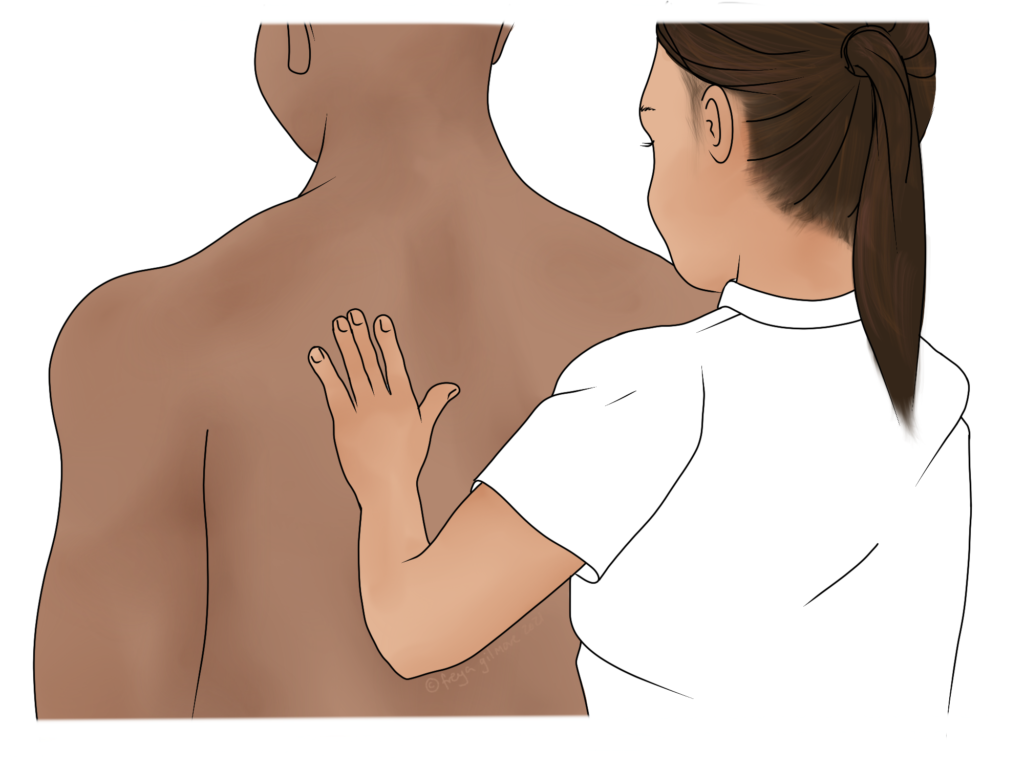
Osteopathy is built on holism: the understanding that everything is connected. This helps us reach the root cause of your problem. For example, lower back pain is often the result of problems further up the back. Treating the painful area alone will not resolve the issue entirely. A detailed case history helps us to be holistic. Asking you to undress beyond just the painful area helps too. We can use our sense of touch to identify problem areas through light clothing, but sometimes vision is the best diagnostic tool.
What Osteopaths Treat
We are trained to help with muscle and joint pains. Sometimes other structures are involved, like how the sciatic nerve can be irritated and cause sciatica. Some of the conditions we treat are listed below. Click on a condition to read more about it:
- Lower back pain
- Sciatica
- Hip and Knee Osteoarthritis
- Frozen shoulder
- Headaches (that originate in the neck)
- Tension
- Fibromyalgia
For information on how we might be able to help with other conditions, see the blog.
What to Expect at Your Appointment
At your first appointment, your osteopath will take a very thorough case history. Not only do we need to work out a diagnosis, but we want to understand what else is playing a role. Conditions like diabetes can affect the rest of the body, and sports or exercise can help or hinder recovery.
After the case history, your osteopath may ask you to dress down. This might not be limited to the painful area, so feel free to bring a pair of shorts and a sports bra if applicable. If you are uncomfortable with dressing down at all, we can adapt.
Your osteopath will ask you to perform some movements, and may feel the way your body moves while you do so. They might repeat the movements when you’re laying or sitting down. Using all of the information collected, they will have a diagnosis for you. They can then devise a treatment plan. Treatment often involves massage techniques and joint mobilisations. Sometimes joint manipulation (clicking joints) is appropriate, but only if you are happy to go ahead.
By the end of your appointment, you will have been given a diagnosis, and usually some advice and exercises to keep your symptoms under control. Your osteopath will also give you an idea of how long they expect your symptoms to last, and how frequently they need to see you.
