
Swelling is often an issue of circulation. Some cases are caused by problems with the heart or kidneys, but others may respond well to osteopathic treatment. Two common examples of issues of swelling are explained below.
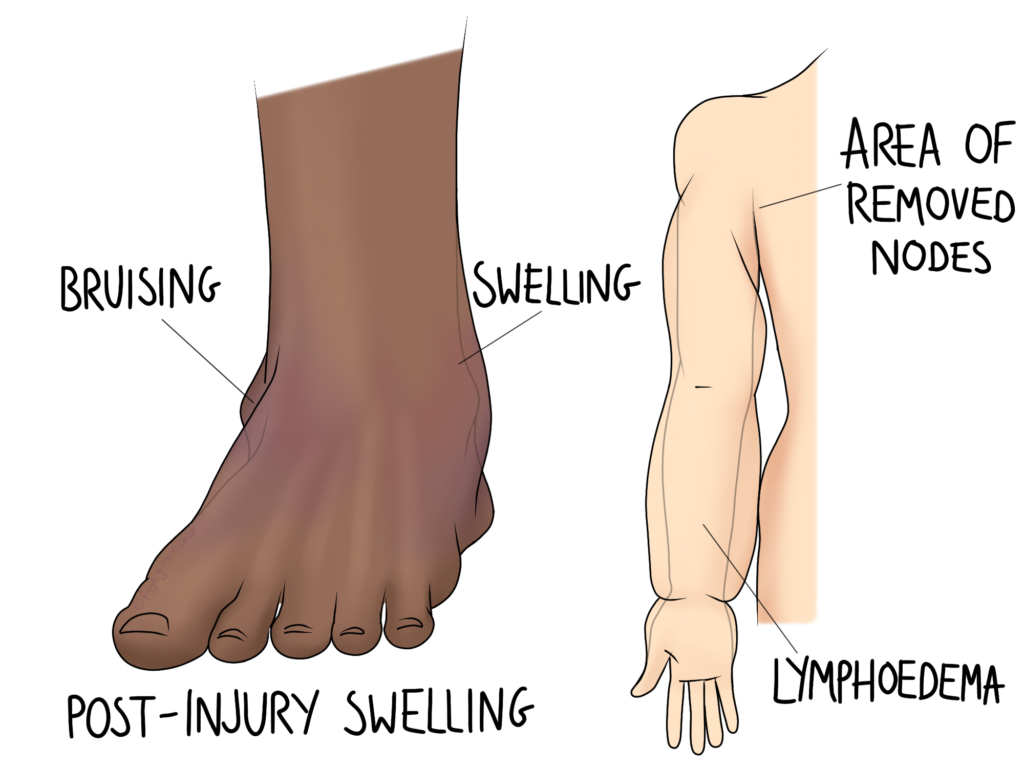
Post Injury Swelling
After an injury, such as a sprain, you might not be surprised to see some swelling and bruising. If your first response is to reach for a cool compress, make sure you know what you’re trying to achieve before you apply it.
Some swelling is useful: it brings nutrients to the area to heal damaged tissues, and allows the body to clear the cells that are too damaged and need replacing. However, excessive swelling can be uncomfortable in itself, and if the inflammation stays put for too long, it uses up its nutrients and stops providing so much benefit. In these cases, using cool compresses or gentle drainage techniques can be useful to encourage the swelling to reduce or refresh.
The more significant the injury is, the more important your recovery process will be. The temptation can be to rest for a long period, but a graded return to activity is key to the tissues healing as well as they can. Your osteopath can work with you from day one to devise a plan to get you back to your usual activities, finding the sweet spot of allowing the area to recover and supporting it with hands-on treatment and activity.
Lymphoedema
The swelling discussed above is within the remit of the lymphatic system. Lymph is the fluid that is left over when cells receive blood: although some of the blood returns to the veins, some products are pushed through to the lymphatic system. This system is closely tied to the immune system, and it holds the “glands” or lymph nodes that can become raised when you are fighting infection. Unlike the vascular system, there is no pump in the lymphatic system, so the fluids move slowly and depend on other factors to keep tissues well drained.
Lymphoedema literally means “lymph swelling”, and can happen when lymph nodes are removed. This surgery can be appropriate for people with cancer, especially if the cancer is near to or has infiltrated local lymph nodes. In breast cancer, the nodes in the armpit may be removed, which can result in lymphoedema in the arm as the area is now harder to drain without intervention.
Managing Lymphoedema
After this surgery, you may be given a course of physiotherapy, exercises to do at home, or compression garments. Some people find that they need additional support, especially if their mobility is already limited and performing the exercises is too difficult to do alone. Osteopaths can help to drain the area to keep the swelling within a comfortable range. This is an ongoing problem so will need regular intervention, but if your exercises are limited by joint pains elsewhere, we can address these with the aim of getting you back on track with self management.
Make an appointment for your circulation issues in Wiltshire here.
