
Although children are seemingly more resilient and elastic than adults, they are still not immune to sports injuries.
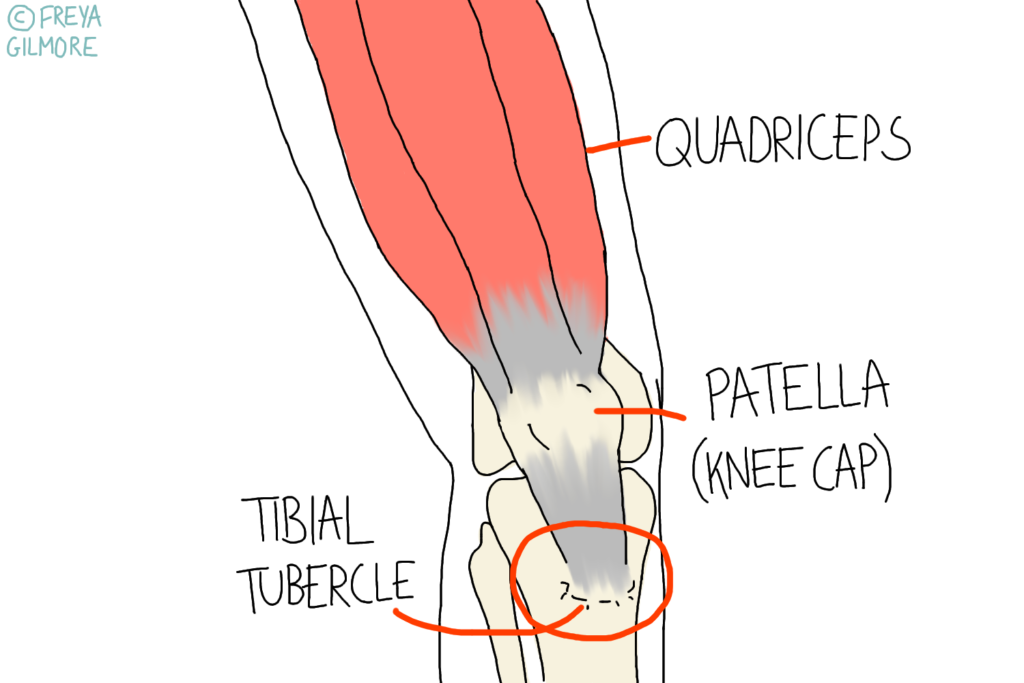
Osgood Schlatter’s Disease
One of the more common children’s sports injuries that we see in clinic involve growth plates. The growth plates are bands of tissue within bone, from which the bone grows. They are softer than the surrounding bone and injury to, or pressure on them, can permanently alter the way the bone grows. Growth plate issues only affect children and Adolescents, as the last growth plate to ossify (turn to bone) does so by the age of 25. Different bones grow at different rates, so each bone’s window of vulnerability will vary to the next.
Osgood Schlatters Disease is one of these traction-based injuries to the growth plate. The growth plate at the top of the shin just below the kneecap is particularly vulnerable to injury in kids who do quadricep-heavy sports. This is because the quadriceps tendon blends into the bone around that growth plate, so the pull from the quads travels straight to the plate. The condition typically presents with pain during and after exercise and a tender lump just below the knee. Because this lump is made of the cartilage from the plate, it does turn to bone over time, turning from soft to hard. Although the bony lump will be permanent it will not be painful forever. In fact, we often see patients present who have evidence of historic Osgood Schlatter’s Disease but don’t even remember any discomfort in adolescence.
Sever’s Disease
The same method of injury is responsible for Sever’s Disease. This is where the Achilles tendon pulls on the growth plate at the heel, and causes a bony spur where the tissues meet. Again, this is more prevalence among sporty kids and presents with pain during and after exercise, and localised tenderness.
The technical term for these conditions is Traction Apophysitis, which may be responsive to treatment that aims to stretch and relax the muscles that are pulling. Adapting your child’s sport through prescribed stretches at home and before activity can help.
Muscle Strains and Ligaments Sprains
Just like adults, children who engage in sports can twist ankles and pull muscles.
Although we always used to advise RICE for soft as you injuries like these, there’s a lot more focus on early rehabilitation now. We want to resume weight bearing much earlier than we previously would have done. Your osteopath can help you with an appropriate timeline for your child’s recovery, including resuming load bearing activity to encourage stronger healing of the injured tissue.
It’s worth noting that when we do ice an area, the aim is not to completely remove evidence of inflammation and swelling. The inflammation needs to happen in order to remove damaged tissue, and to bring in the nutrients for healing. What’s not helpful is for fluid to remain in place around the injury without refreshing. So elevation and icing that helps to flush this fluid through, to then be replaced by new fluid is helpful.
Concussion
Although not the most osteopathic of conditions, it’s worth noting that there is a lot more understanding around concussion then there used to be. If you suspect your child is concussed there are steps to take that would not have been recommended a generation ago. Knowing about them before an injury happens is vital to intervening immediately, should a concussion ever occur. This guidance has been developed in response to the recognition of Post-Concussions Syndrome and long-term issues caused by concussions years before the development of these symptoms. Read more about concussion here.
Click here to make an appointment for your child in Pewsey or Devizes
