
Sudden weakness or drooping on one side of the face can be scary. Your first thought might be “is this a stroke?”. If in doubt, treat as such, but in some cases the cause is Bell’s Palsy. This is a condition affecting the facial nerve, not the brain.
What Is a Stroke?
A stroke occurs when blood supply to part of the brain becomes disrupted. This may happen because of a blockage (ischaemic stroke) or bleeding (haemorrhagic stroke). Without blood flow, brain tissue is damaged quickly.
Because the brain controls movement and sensation throughout the body, symptoms can vary widely depending on which area is affected. Facial weakness is common, but strokes often involve other neurological symptoms too.
The NHS promotes the FAST test:
- Face: has the face dropped on one side?
- Arms: can both arms be raised?
- Speech: is speech slurred or confused?
- Time: call 999 immediately
Stroke symptoms should always be treated as a medical emergency. Other symptoms include a sudden, severe headache, changes to vision, and reduced balance.
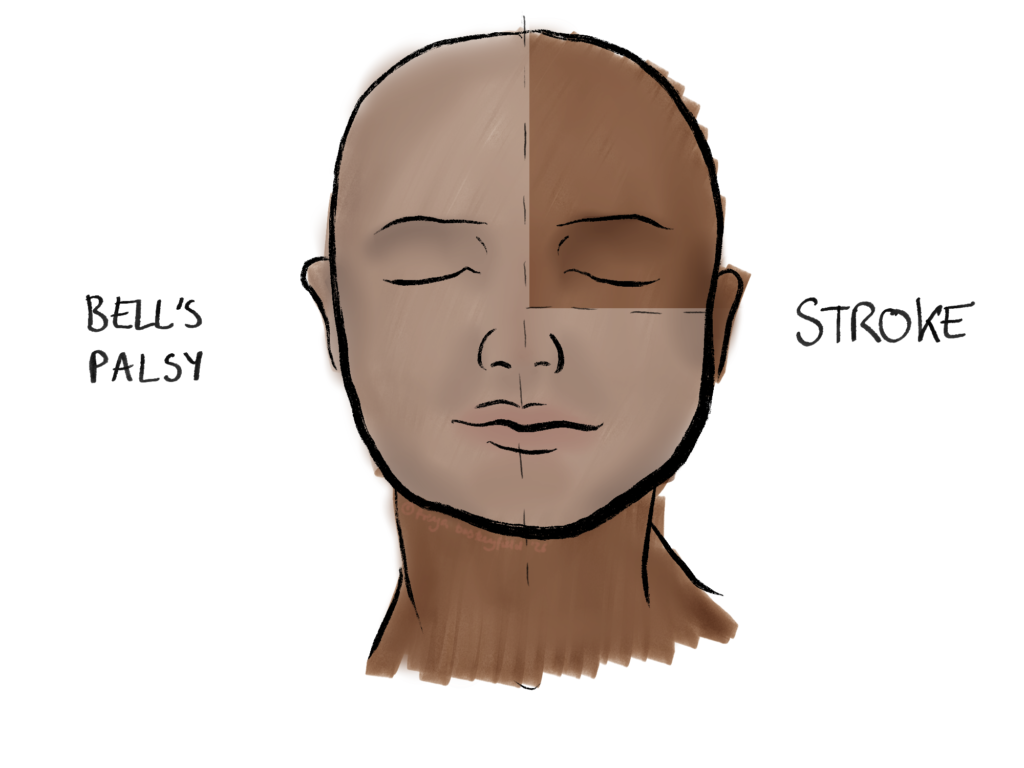
When the face is involved, The upper third is spared, as other nerves further down the chain can take over.
What Is Bell’s Palsy?
Bell’s Palsy is a condition affecting the facial nerve. There are two facial nerves, one on each side. Each exits the brain and supplies power and sensation to one side of the face. The exact cause is not yet fully understood, but it is thought to involve inflammation of the nerve, sometimes following viral illness. Symptoms usually come on relatively suddenly over hours or a day or two. Unlike stroke, Bell’s Palsy typically affects the whole side of the face, including the forehead.
Symptoms of Bell’s Palsy
- one sided facial drooping
- difficulty blinking or actively closing the eye
- altered taste and sound
- watering eye or dribbling
Importantly, Bell’s Palsy does not cause limb weakness. Speech problems are less likely than with a stroke too.
Differentiation Between Bell’s Palsy and Stroke
One key distinction clinicians look for is forehead movement. In Bell’s Palsy, patients often struggle to raise their eyebrows to wrinkle the forehead. Forehead movement is usually at least partially preserved in a stroke. Bell’s Palsy may also limit a person’s ability to fully close the eye because the nerve supplying the entire side of the face is affected.
However, there are always caveats, and patients should not try to self-diagnose at home. Sudden facial weakness warrants urgent medical attention.
Recovery and Lingering Symptoms
Osteopathy does not treat the neurological cause of either condition, but may help support recovery once appropriate medical management is underway. This may involve steroid therapy for Bell’s Palsy, and a multidisciplinary team for strokes.
Persistent tension around the neck, jaw, shoulders, and upper back is common after facial weakness. Changes to posture and movement patterns may also contribute to headaches or upper back stiffness over time.
Treatment plans are tailored to each person, and vary by appointment as symptoms improve. A plan might involve
- mobilising stiffened areas
- relaxing tightened muscles
- improving posture and mechanics (including breathing techniques)
