
Osteoporosis is a condition mainly affecting older women in which bone density is lost. People who have lower density than normal may be diagnosed with osteopenia, which is a less severe state. We need to know if you have low bone density, as it will affect which treatments are suitable for you. People with lower bone density are more likely to suffer bone fractures, especially of the hip and spine.
What is Osteoporosis?
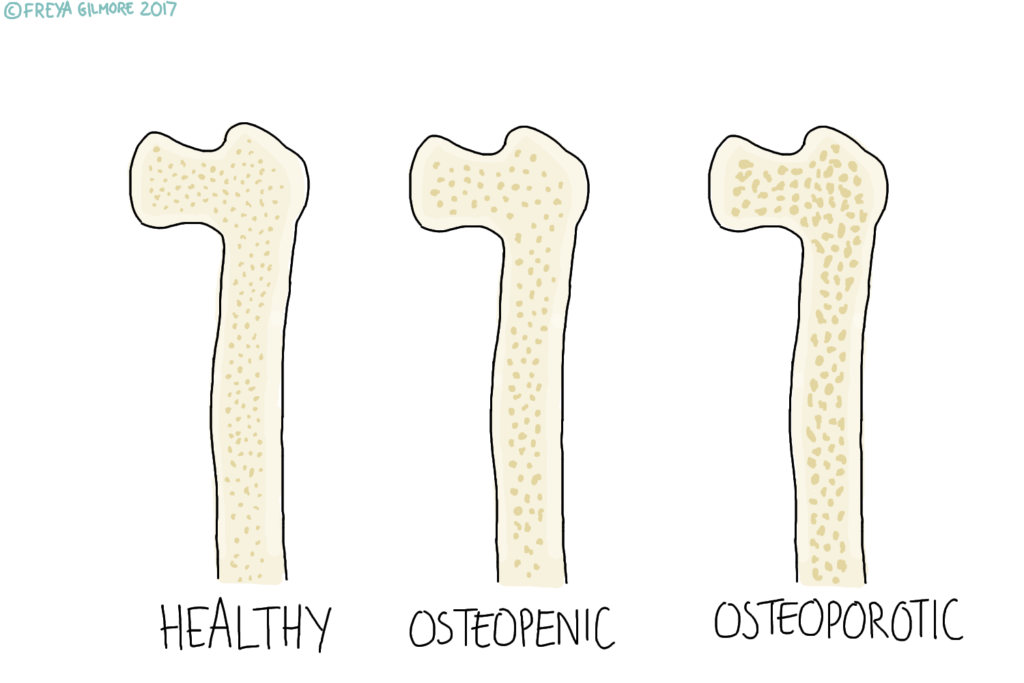
Bones are living tissue, and they are not totally solid throughout. The illustration above shows a healthy level of porosity vs osteopenic and osteoporotic bones. Like any other living tissue, there are cells that work to keep bone healthy. There are some that break down older or damaged bone, and others that replace it. In osteopenia and osteoporosis, the cells that break down bone work faster than those that rebuild it. Reasons for this are discussed below.
The good news is that because bones are living, they are responsive. The analogy that the body is like a car, (and parts are worn out over time) is a flawed one. Tyres won’t regenerate if you use them consistently, but tissues can. One study showed that the bone beneath cartilage in the knee was improved in middle age people after training for a marathon.
Diagnosis is simple, and is confirmed with a DEXA scan. This is an x-ray combined with some calculations to give a score for any given area. The number determined by the scan gives an idea of bone density in that area. Often a few areas are tested, as density varies throughout the body. You can get a DEXA scan privately, or through your GP.
Risk Factors
Osteoporosis mostly affects older people, especially post menopausal women. Women who have had their ovaries removed are more likely to develop the condition, especially if they are not on HRT as the body enters surgical menopause when the hormone levels drop.
Men are not immune to osteoporosis, and are more likely to develop it if they have:
- low testosterone levels
- a history of steroid use
- a history of alcohol misuse
Other hormonal factors that increase the risk of both men and women are conditions that affect:
- thyroid function (especially overactive thyroid)
- the adrenal glands
- the pituitary gland
- the parathyroid gland
There is also a link with rheumatoid arthritis and low body weight.
Management
Osteopathy cannot cure osteoporosis, but we can help to support you in lifestyle changes that encourage stronger bones.
As bone is living tissue, its structure can change (for the better!) in response to demands placed upon it. Weight bearing exercise is a well recommended way to improve your bone density. Weight lifting can help, but so can jogging or playing a team sport. Your osteopath can help you work out which exercise might be most appropriate for you, and we can develop this as time goes on.
Calcium is an important mineral for bone health, and vitamin D aids absorption. Vitamin D deficiency is common, so your GP may advise you to take a calcium and vitamin D supplement if you are at risk of developing osteoporosis. Sometimes they will also prescribe bisphosphates, which are medications that work to further rebuild the internal bone structure. HRT may also make up part of your management strategy, but this is less likely past the usual menopause age.
