
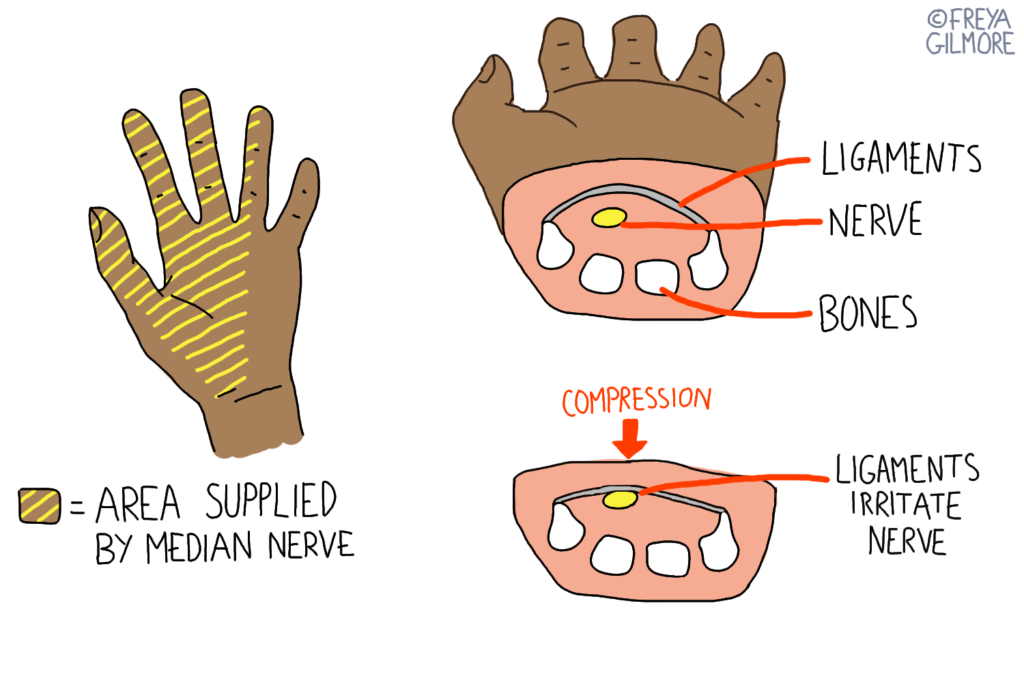
The carpal tunnel is a small space within the wrist that can be vulnerable to compression or irritation. Nerves, tendons, and blood vessels pass through the tunnel, and irritation to the nerve can cause the symptoms of carpal tunnel syndrome (CTS).
Symptoms of Carpal Tunnel Syndrome
The nerve affected here is the median nerve, which supplies most of the palm of the hand (illustrated above). The following symptoms therefore affect some or all of this highlighted area.
- pins and needles or tingling
- a toothachey or shooting pain
- weakness, or muscle wasting in chronic cases
Other problems can cause similar symptoms, but their subtle differences are key to reaching the right diagnosis and embarking on the most appropriate treatment plan. Occasionally we encounter patients who have had one or more ineffective surgeries to release the carpal tunnel- it is possible that their symptoms were never caused by the wrist, but that a nerve was irritated further up the arm or neck.
Risk Factors
Irritation can be caused by pressure from outside the tunnel or from within it. Those who may develop increased pressure within the carpal tunnel include:
- pregnant women
- people with kidney or heart disease
- athletes or workers who require a lot of strength through the wrists
External pressures can be as simple as resting your wrist on something repeatedly or for long periods. If your desk set-up encourages this, or you feel the need to use a mouse mat with a wrist cushion, let us know so we can advise you on improving your desk ergonomics. Your wrists should be in a neutral position, and not subjected to direct pressure- altering your chair and armrest heights may be enough to resolve this.
Managing Carpal Tunnel Syndrome
As there are a range of potential causes for CTS, your treatment plan will be dictated by the factors at play in your case. If your case is exacerbated by fluid retention, we will probably want to use drainage techniques to encourage fluid back into circulation, thus reducing pressure within the wrist. When your fluid retention is due to an underlying condition, we do expect it to return, but we can give you exercises to help you to manage the pressure between appointments. Encouraging swelling to move on, even if it does build up again over time, does help with local tissue health: fluid that sits for too long passes on its nutrients and picks up waste products, which we want to return to circulation.
When the cause relates to overuse of the forearm muscles, we can take a double pronged approach to both reduce tension and improve strength. It might sound counterintuitive, but muscles that are stronger don’t have to work so hard. Sometimes it’s the strengthening process that causes the irritation, and building muscle strength in a more gradual way may achieve the benefits without the discomfort. A new strengthening routine combined with massage and stretching techniques and exercises may be enough to ease tension within the carpal tunnel and provide long term relief.
Make an appointment for your carpal tunnel syndrome in Wiltshire here
