
Lower crossed syndrome is a pattern of muscle weakness and tension around the pelvis. It can be associated with lower back, pelvis, or hip pain.
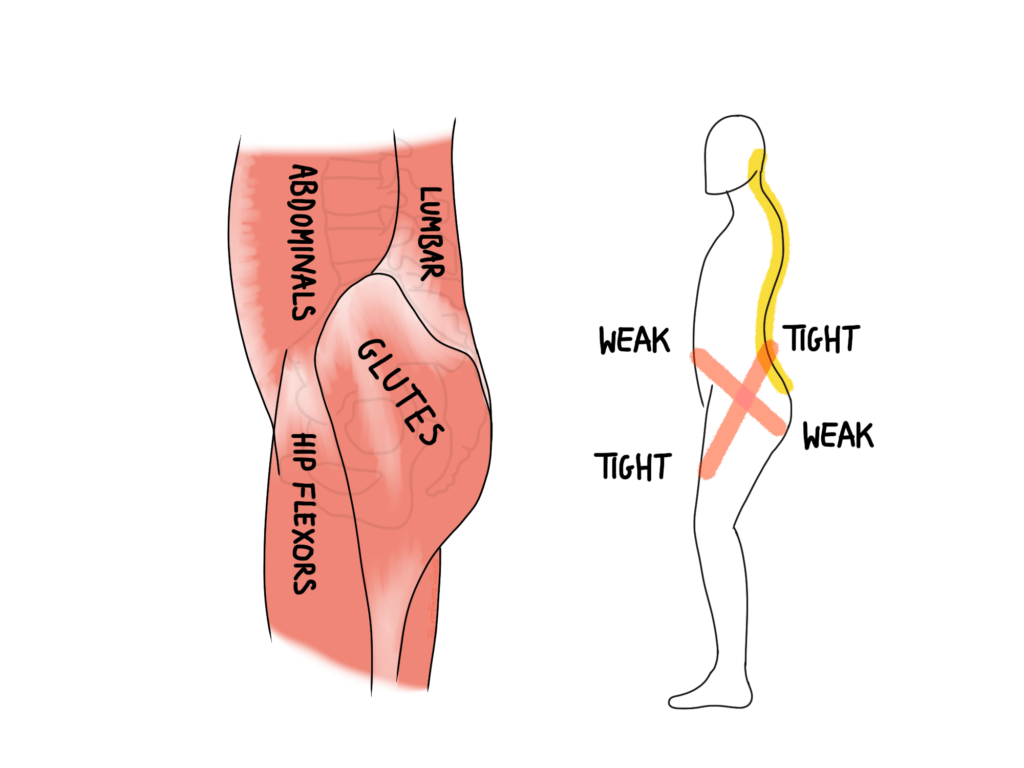
The Tension-Weakness Pattern
Lower crossed syndrome is characterised by:
- weak abdominal muscles
- tight lower back muscles
- tight hip flexors
- weak gluteal muscles
You might also find that the hamstrings are tighter than they should be too. This pattern pulls on the lower back and pelvis, encouraging a posture where the lower back is more arched and the pelvis tips forwards. As a result, the hips are held in a degree of flexion, which can predispose the insidious development of hip arthritis. Diaphragm involvement is not unusual, and when the diaphragm is strained you may find an increase in reflux.
The areas form a cross if you pair up the matching problems, thus the name “crossed”. Upper crossed syndrome also exists, and refers to a similar pattern around the shoulders.
Causes of Lower Crossed Syndrome
Weak muscles are often overstretched, especially when the muscles that act against them are tight. If you’re stuck in a seated position all day, such as driving or at a desk, this could be part of the problem. Constant hip flexion encourages shortening of the hip flexor muscles. Thus the gluteal muscles and hamstrings are held in stretch for hours at a time. Improving your ergonomics can help, and we can offer advice, but ultimately the best thing to do would be to move around and get out of your seat as much as is realistic.
Pregnancy encourages the development of the posture associated with LCS. It also puts pressure on the abdominal muscles, so in postpartum, the posture may remain and be further entrenched by abdominal weakness. Many mothers have diastasis recti, where the abdominal muscles remain significantly separated, years after pregnancy. If you’re unsure, we can diagnose and help you to manage it.
Osteopathy for Lower Crossed Syndrome
With a pattern like this, you may find yourself in clinic due to another ache or pain developing. Because osteopaths look at the body as a whole, we’re in a good position to pick up the muscular imbalance to address the root cause. A detailed case history and examination will give us the clues to spot the imbalance, so alongside treating your symptoms, we can start to stretch and strengthen the muscles around the pelvis.
Similarly, we are well placed to spot the other effects of the lower crossed syndrome. A deep curve in the lower back is typically balanced out by a more prominent kyphosis (outward bend) in the upper back. This too may need to be compensated by a deeper neck curve. Another pattern of tension, weakness, and stiffness may follow.
You can expect to leave your appointment with a good understanding of what’s going on. This knowledge will help you to follow your exercise plan effectively. For your personalised plan, make an appointment via the link below.
Click here to make an appointment for Lower Crossed Syndrome in Devizes or Pewsey
