
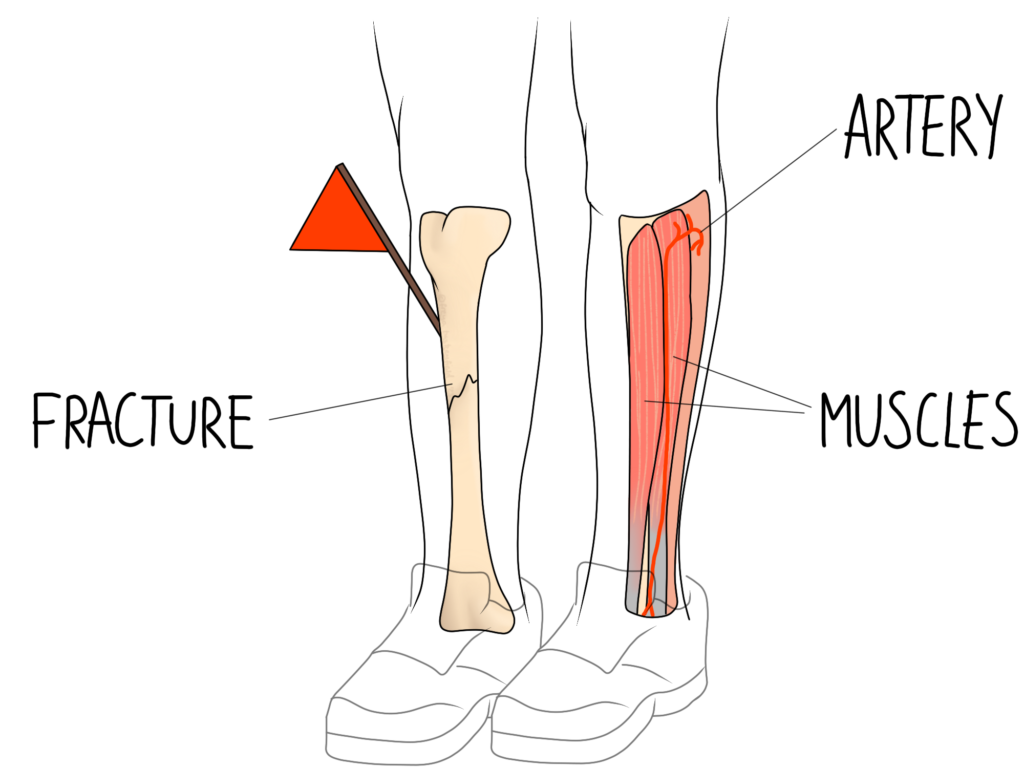
The musculoskeletal system is full of compartments, and those in the arm and lower leg can develop compartment syndrome. This is when pressure within a compartment becomes unusually high. The raised pressure can result in the blood supply becoming cut off, which would result in injury to the muscles and tissues beyond it. Without quick intervention, this could cause irreversible damage.
Chronic Compartment Syndrome
The type of compartment syndrome that is more likely to bring a patient to clinic is the chronic type. Here the raised pressure is less extreme, but persists for a long time. One study suggests that the average time from onset to diagnosis is close to two years. Typically, symptoms are mild but increase with exercise, where they could be mistaken for a pulled muscle, shin splints, or something similar.
The NHS recommends you see a GP if you keep getting pain, numbness, swelling, or have difficulty moving a part of your body when you exercise
Aggravating exercises are normally higher impact. Running and military drills are associated with the development of the condition, which is also knows as chronic exertional compartment syndrome in reference to the role played by exercise.
Acute Compartment Syndrome
In contrast, acute compartment syndrome is a medical emergency. It may manifest as sudden, severe pain in one area of the body, which would warrant a trip to A&E or a call to 999. If we suspect it, we will send you straight to hospital. The onset is usually traumatic, such as:
- a crush injury
- a broken bone
- severe burns
- major surgery
- blunt trauma
Initially, you may experience pain, altered sensation (such as numbness or pins and needles) and limited movement. Over time, this can develop into total numbness, muscle contracture, and loss of colour in the skin.
When treated within 6 hours of onset, full recovery is close to 100%. But when treatment is delayed to 6-12 hours since onset, only around 66% of patients make a full recovery. Those who do not make a full recovery are mostly limited by permanent neurovascular damage due to the increased pressure. This can lead to chronic pain, contracted muscles, and in some cases, amputation.
Rehabilitation
After medical investigation (and treatment where appropriate), rehabilitation is important. Physical therapy is part of the standard treatment plan for chronic compartment syndrome.
Lifestyle changes and advice are also key parts of the management strategy. For chronic compartment syndrome that doesn’t warrant surgical intervention, exercise alteration is important. Rather than suggesting you simply stop exercising altogether, it would be more helpful for you to modify your exercise to a level that doesn’t raise the intra-compartmental pressure. As symptoms ease we can begin to return to your normal exercise levels.
It may be a good idea to also see a podiatrist who can prescribe orthotics if your symptoms do not improve as expected. Techniques to reduce inflammation, like using a cool compress, may also be appropriate.
Click here to make an appointment for your aches and pains in Wiltshire
