
Hormones are constantly changing, but longer term changes can have a significant effect on the way your body experiences pain. Two common examples are menopause and hypothyroidism (low thyroid function).
Menopause
Menopause affects half of the population at some point, but it has only recently become a topic that people are (somewhat) comfortable to talk about. Symptoms vary widely between individuals, and some can be difficult to pin down. The production of a few hormones is completely changed during this time, with oestrogen being one of the most affected.
One of oestrogen’s roles is maintaining bone density. After the menopause, women are much more likely to develop osteoporosis or osteopenia. Therefore, pain related to fractures is more likely too. Ensure that you are eating well and regularly exercising to help your body maintain density. Load bearing exercise is particularly important. If you are worried about your bone density, it can be calculated from an X-Ray scan that your GP should be able to refer you for.
Alongside this, the menopause may actually make you more sensitive to pain itself. New guidance from the British Menopause Society recognises that increased joint and muscle pain can be a symptom of the menopause. In contrast, some people find that a drop in oestrogen actually reduces the intensity or incidence of their headaches and migraines.
Hypothyroidism
There are countless hormones in circulation in the body, and a handful of them come from the thyroid. An underactive thyroid is a relatively common issue, affecting around 3% of the population. It affects women much more frequently than men, and can occur after giving birth, resolving within a year. Other causes include medications for an overactive thyroid, and autoimmune conditions.
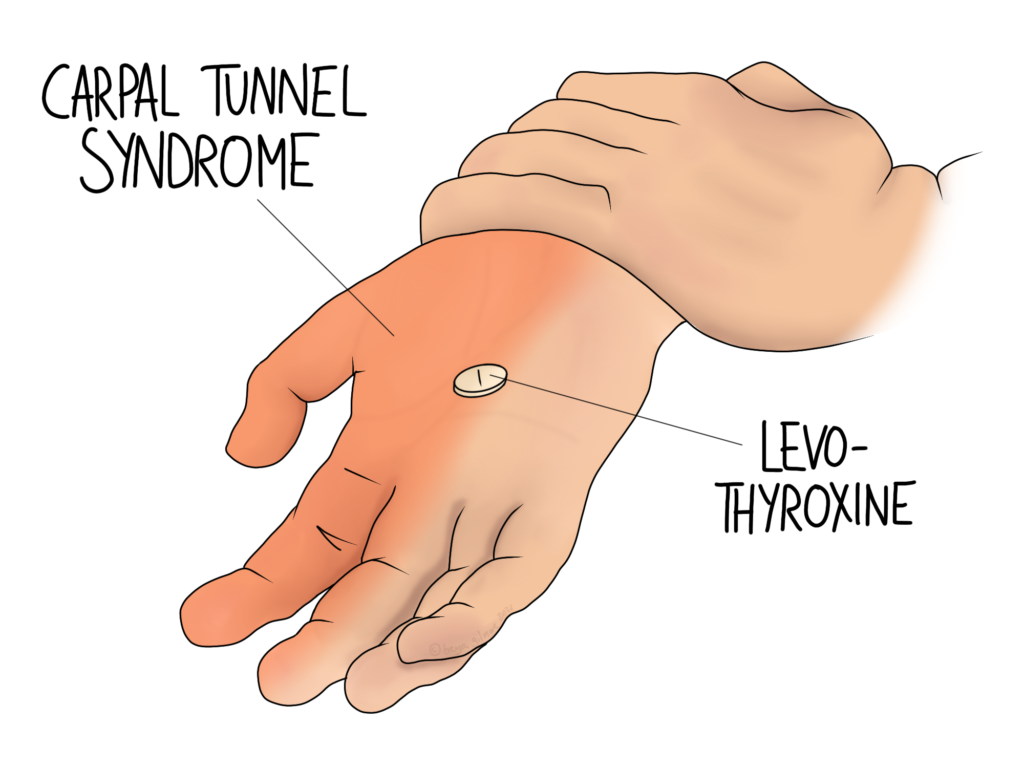
Its association with pain is mostly neurological. Research shows that the early stages of the condition are most likely to elicit neurological pain, which means the pain may precede the diagnosis. Carpal tunnel syndrome is an example of the kind of pain that is more likely to develop alongside hypothyroidism. You can read more about carpal tunnel syndrome here.
Hypothyroidism has other neurological effects too, including a reduction in
- hearing
- taste
- vision
- memory
- concentration
These changes may come up in your case history, alongside changes to weight, bladder and bowel function, and feeling cold or noticing hair loss. These symptoms can all point towards and underactive thyroid, and spur us to ask you to make an appointment for a blood test with your GP surgery.
Relevance to Osteopathy
We know that pain is complicated, and understanding the factors that affect your pain help us to build a clearer picture of your case.
Often patients come to us and reveal that they try to avoid painkillers, as they’d rather get to the root of the problem. This is fine, but sometimes analgesics can help to break the cycle. If your pain is negatively impacted by hormonal changes out of your control, taking the edge off with painkillers is not necessarily a bad thing. Treatment can continue alongside to address the other root causes of your pain. We cannot advise you on suitable medications, but we can direct you to your local pharmacy or GP for tailored medication advice.
Click here to make an appointment online for your pain in Wiltshire
